Every valuable thing sits inside a group of people who care about it.
KiVerify™ is where that group can check who is involved, what happened, when, and how.
You already belong to several
A community of interest is a group of people connected by something they all care about. Researchers who study online communities describe two kinds of community of interest: people who gather around a shared interest, and experts brought together to get a job done, each holding a different stake and none seeing the whole. You belong to more of both than you might think.
People who share an interest.
A neighborhood group, a car club, or an online forum about a hobby. Members swap tips and answer each other’s questions.
People with a job to do together.
A team building a school: the architect, the builder, the inspector, and the school district. Each one brings a skill and cares about something different, and no one sees the whole project alone.
People connected by trade.
A manufacturer, its suppliers, its shippers, and its customers.
People who share a place.
The owners in a condo building, their board, their building manager, and their insurer.
People who serve the public.
A city, its engineers and contractors, and the residents who rely on a bridge or a water system.
People and things around one valuable asset.
Everyone and everything connected to a building, a ship, an aircraft engine, or a portfolio: the owners, engineers, contractors, inspectors, suppliers, lenders, insurers, and buyers, and the products, contracts, and payments that connect them.
That last kind is where money and risk meet.
It is the kind of community KiVerify is built for.
Every community needs a shared language
A community works when everyone means the same thing by the same words. The U.S. Department of Defense makes this point about its own communities of interest: a community of interest “must have shared vocabulary for the information it exchanges.” Without it, each party keeps its own version of events.
Most communities run on trust
Every community runs on what its members tell each other. In most of them, nobody checks. You take someone’s word for who they are, what they did, and when they did it.
That works until something goes wrong, or until someone new, like a lender or a buyer, needs proof.
KiVerify is a community where the important things are checked
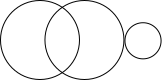


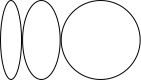
Every fact in KiVerify is recorded the same way, with the same four answers. That gives the whole community one language for what happened.
Why a verified community is worth more
When the who, what, when, and how can be checked, people stop asking the same questions. The lender does not have to inspect again. The buyer does not have to redo the work. Each fact is verified once and used again and again.
You stay in charge
Its value is yours. You grant access, and you withdraw it. It transfers with the asset when you sell. KiVerify holds the record for you; you hold the key and decide who sees it.
Where these ideas come from: France Henri and Béatrice Pudelko, “Understanding and analysing activity and learning in virtual communities,” Journal of Computer Assisted Learning (Blackwell Publishing), vol. 19, 2003, pages 477 to 479, doi.org/10.1046/j.0266-4909.2003.00051.x. U.S. Department of Defense, Office of the Chief Information Officer, “DoD Net-Centric Data Strategy and Community of Interest (COI) Training Glossary,” version 08.3, undated, page 1, dodcio.defense.gov/portals/0/documents/dt-12-coi-glossary.pdf. Applying these ideas to assets is KiVerify’s own analysis.